

 Pataka flying the flag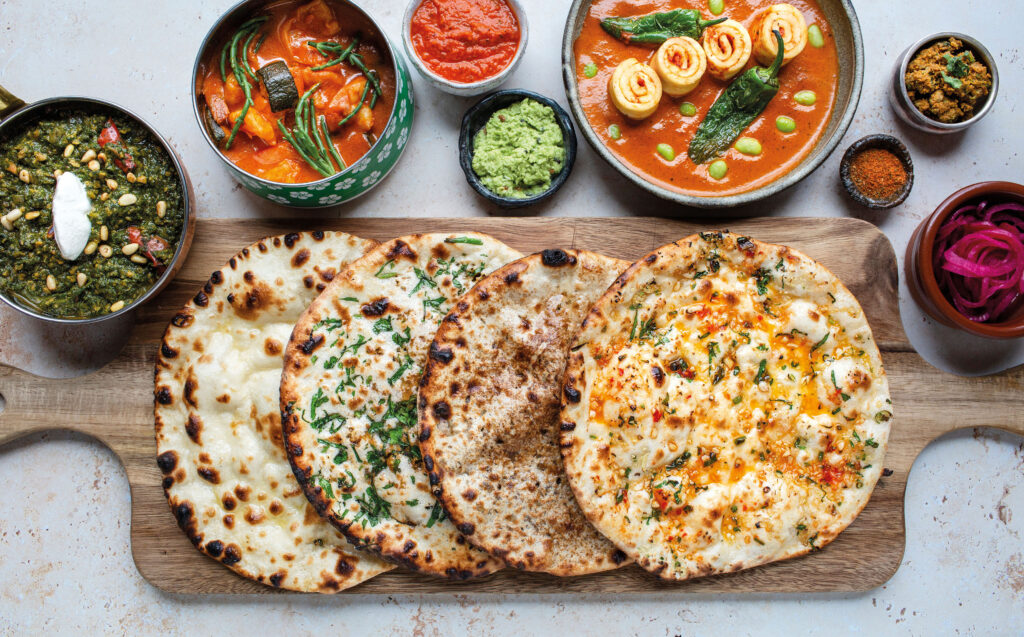
Arjun Baljee knows a thing or two about food. He trained at the Cornell University School of Hotel Administration, before moving on to work at a number of five-star hotels, including Fairmont, Four Seasons and The Oberoi. Even without this training, Baljee has a fair idea of what it takes to build a food service business. His family runs the Royal Orchid Hotels group in India, which comprises more than 60 hotels, each with their own food and beverage (F&B) offerings, all managed in-house.
“Safe to say, my earliest memories were of hanging out at my father’s hotels, learning to cook from the chefs,’ says Baljee.
Making a ‘bright’ start
All of which should stand him in good stead for his latest venture, Pataka, which opened in February, and which Baljee describes as a ‘food tech start-up’ making use of a ‘bright’ kitchen. Having moved to London in the last year during the pandemic, Baljee says there was a glaring need to do something in the F&B space with existing kitchen infrastructure. One way to tackle this is through so-called ‘dark’ kitchens – a unit or container in an industrial business park where takeaway food is prepared for delivery, and which have unsurprisingly thrived during lockdown. Baljee’s take is slightly different – he is calling his new venture a ‘bright kitchen’.
“The current nomenclature is to use ‘dark’ and ‘cloud’ kitchens – all negative connotations in my view,’ he says. ‘There are thousands of existing restaurants and spaces in London, and in every major city, begging to be rejuvenated. We want to be that ‘bright’ idea. Money has been spent on infrastructure and equipment, and is a complete waste when not utilised efficiently.”
Pataka’s concept is to operate from fully-licensed local restaurants – it is currently resident at the site of Adrian’s Restaurant in Victoria. It pays them a share of the revenue, which Baljee says ensures said restaurants can still afford to pay some of their monthly dues to their landlords. In Baljee’s words, it’s restaurant-quality food, served as the chef intended, as if in a sit-down restaurant, but packaged for delivery. These spaces have restaurant seating as well so the aim is to eventually have a dine-in facility at each spot.
“We take over the staffing and help them minimise their holding costs and ensure that their investment isn’t written off,” adds Baljee. “The driving factor is that we want existing investments in infrastructure to be utilised in a more efficient manner. We see limited value in building new infrastructure when there are so many restaurants that are closing around us everyday.”
Taking on tradition
Pataka, which means ‘firework’ in Hindi, describes itself as a pan-Indian restaurant concept, taking flavours from around the country and updating the way each dish is cooked or putting a twist on it.
“For example, we have taken the mundane paneer makhani [a creamy dish of paneer with a tomato-based gravy] and updated it to make a paneer roulade, with edamame beans and padron peppers.” says Baljee. “It’s a cross-over between a kadhai paneer and a paneer makhani, but the makhani flavour is authentic and the edamame and padron peppers add a dimension that you wouldn’t otherwise associate with Indian food.”
Similarly, he says everyone does a stuffed kulcha, an Indian flatbread. Pataka’s version has pecorino cheese, shitake mushrooms and truffle oil. As Baljee points out, none of these ingredients are common in Indian cuisine, but thus far, it is proving to be one of Pataka’s more popular dishes.
Screen time
Technology is also at the heart of the business – in its cooking, delivery and the way it interacts with guests. At present, with the delivery-only model, the mobile phone, tablet or desktop screen is the only front-facing tool Pataka has to interact with diners. But Baljee has plans to use technology beyond this.
“The tech we are developing will ensure that we know what the customer wants – their preferences, perhaps curating a dining experience based on ‘mood’ rather than pushing what we have on our menu, “ he says. “We are developing data models to determine what a local demographic wants and at what time, frequency, temperature, dietary requirements – there are many many variables that today are catered to by the higher-end, personality- driven restaurants. We want that ‘mindfulness’ and curation to be driven by technology and processes, and delivered whether in-house or at home in every neighborhood.”
Baljee believes the ‘bright kitchen’ model is here to stay, as long as there are restaurants in distress. Some of those spaces will become full-blown Pataka restaurants, some will remain a delivery outpost.
“Our business model and brand have been designed with an incredible amount of adaptability to suit spaces,” he says. “This gives us the flexibility to do what is right by the space to maximise its utility and return.”
Baljee has a few other sites lined up across London already, potentially in Bermondsey, Bayswater, Richmond and Highgate, but is cautiously waiting for April 12 to come around, with the aim of opening outdoor seating at the existing site in Victoria.
“By the end of the year we hope to have London covered, and have four sites ready to go,” he says. “The only question that needs answering over time is how soon indoor dining will return to its 2019 peak. Our investments will be driven by that data.”
Pataka review:
There’s spice and lots of it, along with truffle and pecorino…
Pataka’s aim is to combine more unusual flavours with traditional Indian dishes, and it’s certainly hit the mark there. The food delivery travelled well in recyclable containers but it wouldn’t hurt to pop some of the dishes in a preheated oven.
We tried the butter chicken – it was just the right side of creamy, with enough spice to elevate the dish above the norm and paired with a mushroom rice enhanced the flavour further.
The ‘Konkan Grilled Chicken Cafreal’ – chicken skewers dusted with fresh coriander and light green chillies was also beautifully spiced. A pungent black dal and potato and pea samosa chaat also travelled well, while the soya and spinach was an unusual vegetable side dish, flavoured with cumin, pine nuts and masala creme fraiche. If you are looking for something a lot different, try the truffle pecorino kulcha. These flavours can tend to be overpowering, particularly if you are not a huge fan of truffle but the taste was incredibly subtle while still giving a little kick. We also tried a garlic chilli version which was equally delicious. The kulcha was a little on the hard side but that might be the bane of food delivery. The dessert – Rasbailey – was also a revelation, a version of rasmalai infused with Bailey’s.